European Alps
Chamonix, Zermatt, St. Moritz
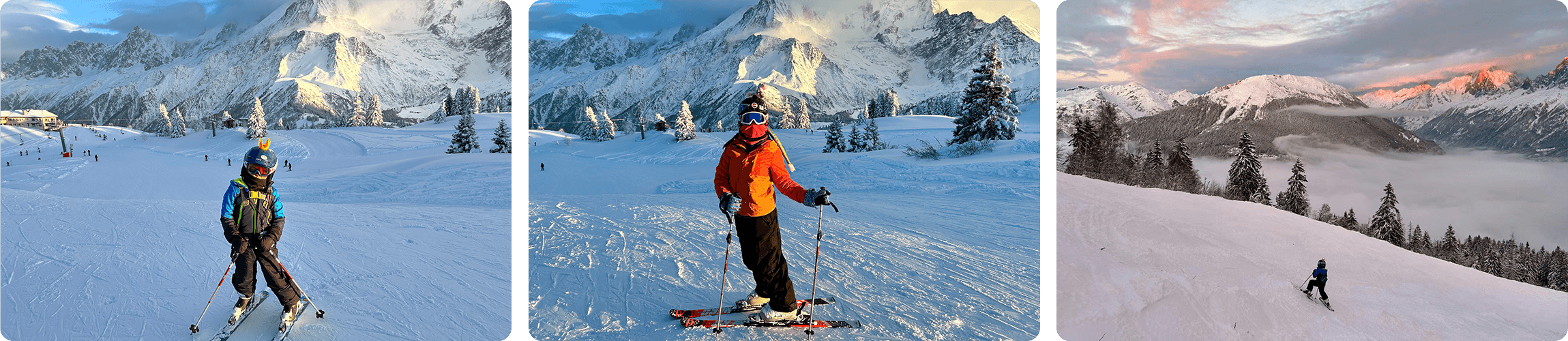
The European Alps were our ultimate ski test, featuring legendary peaks, iconic villages, and snow that doesn’t forgive mistakes.
Our first stop was Chamonix, home of Mont Blanc: the highest peak in the Alps.
The snow was deep. Too deep. Light, soft, and completely unforgiving. One wrong move and you disappeared. First the kids got stuck and burst into tears. Minutes later, I was trapped in the same powder and owed them an apology.
Deep powder sounds romantic and peaceful, until you’re buried with your skis pinned underneath you.
Then the sky cleared.
When Mont Blanc finally revealed itself, glowing above the valley, every struggle from the previous days felt small. Skiing from the clouds down to the valley floor left my legs numb, but the alpine sunset made it worth it.
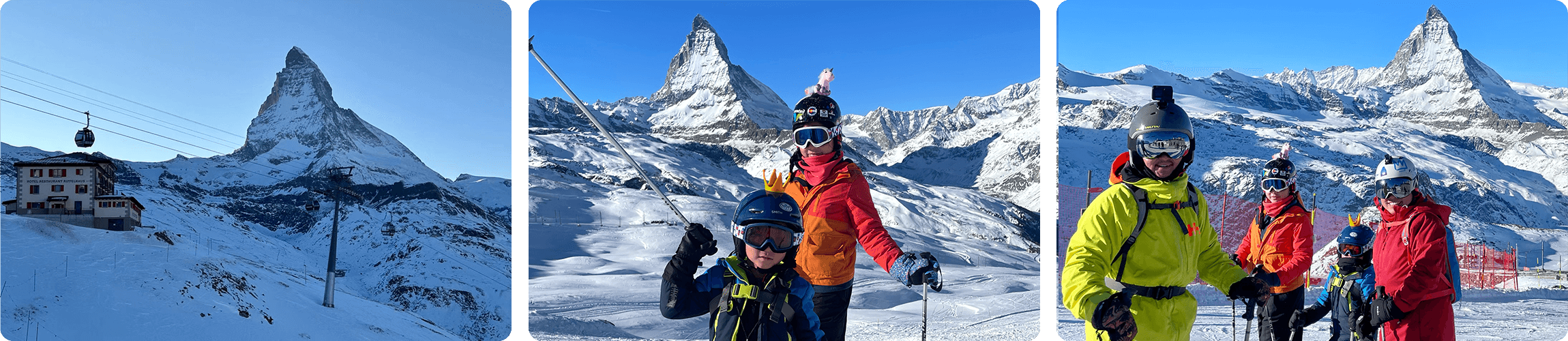
Our next stop was Zermatt, where we saw the perfect triangular silhouette of the Matterhorn.
Each morning we rode mountain trains up to ski. There’s even a late train around 8 p.m. which you can take to see the snow-covered peaks under the stars. We lasted thirty freezing minute, but it was worth every shiver.
What surprised me most was the skiing culture. People charged downhill with purpose. Fast. Efficient. Focused. It didn’t quite match my dream of leisurely carving turns while admiring the view.
Zermatt felt organized, polished, and iconic — almost like skiing inside a postcard.
St. Moritz presents itself as Alpine royalty, being a two-time Winter Olympics host, celebrity playground, and hosting historic five-star hotels.
My honest opinion? The marketing team deserves a raise.
For us, it felt overrated and overpriced.
The snow was average at best. Some slopes exposed dirt; others were icy. Of course, ski resorts depend on weather, and perhaps we were unlucky.
The frozen lake at the base was beautiful, and the kids loved it. But alpine lakes like this aren’t rare in Europe.
The town itself carries undeniable old-money glamour. But when thousands of visitors (including people like us) chase that same luxury dream, the illusion cracks a little.
In my imagination, I edited the scene: no taxis, no rental cars, no tired tourists. Just fur coats, cigars, designer bags, and the occasional horse carriage. Suddenly, the marketing made sense.
Still, I’m glad we went. Swiss skiing is now officially checked off the list!
The Alps aren’t just about skiing. They’re about scale — mountains that make you feel small, villages that feel historic, and sunsets that stay with you long after the trip ends.
Though it may not have been a perfect trip, it certainly was unforgettable.
European Alps Family Ski FAQ
- Which Alps resort is best for families?
We like Chamonix the best for its pricing and cozy ski-town atmosphere. Zermatt felt the most organized and family-friendly, with efficient lifts and smooth logistics, while St. Moritz leans more toward luxury than practicality. - Is Alps snow better than North America's?
The Alps offer stunning scenery and massive terrain. Snow quality depends heavily on timing — powder days are wonderful, but icy conditions are common. - What is the best time to ski the European Alps?
Late January through March typically offers the most reliable snow. February can be crowded due to European school holidays. We visited during Christmas 2024, and conditions were a bit icy. - Is it expensive?
Yes. Lift tickets, food, and lodging are slightly higher than in North America, though the difference isn’t dramatic. Switzerland, however, is noticeably more expensive than France. - Would we go again?
Absolutely — for the scenery alone. We’d choose timing carefully and prioritize snow conditions over reputation.
For our full European Alps family road trip guide, click here.
Explore more family travel destinations here.